


From 100+ real CTO job descriptions

What does a CTO actually do? One title. Eight jobs.

The title sounds like one job. The market writes it like eight. Across 100+ real CTO job descriptions, the common core for a chief technology officer spans strategy, systems, people, product, operations, data and AI, risk, and speaking for technology in the business. This page is the map of that seat. Read it to see what the job asks. Score yourself if you want a personal priority list.

Eight clusters from 100+ real postings. Hover or tap to open the map.

Take the CTO Gap Assessment

Or keep reading. The eight clusters below are the same map either way.

  • Eight responsibility clusters from real postings
  • What the market asks for, not an HR template
  • Same research map as the CTO Gap Assessment

The pattern

Architecture readiness is not seat readiness.

First-time CTOs usually feel ready on architecture. The market also expects hiring systems, vendor and burn control, security ownership, and the ability to explain tech to a CEO or board without a slide deck full of boxes.

Score yourself against this map

The quiet gap

What 100+ postings actually ask for

Almost every posting asked for strategy and people. Many also expected cloud, cost ownership, AI judgement, and board-ready communication.

If you only own engineering delivery, you are holding part of the seat. Not the whole thing.

Feeling the gap is useful. Scoring it is better.

Research findings

Three patterns across real CTO job descriptions

One title, eight jobs

Almost every posting asked for strategy and people. Many also expected cloud, cost ownership, AI judgement, and board-ready communication. If you only own engineering delivery, you are holding part of the seat. Not the whole thing.


The surprises sit outside the code

First-time CTOs usually feel ready on architecture. The market also expects hiring systems, vendor and burn control, security ownership, and the ability to explain tech to a CEO or board without a slide deck full of boxes. Architecture readiness is not seat readiness.

AI is no longer optional language

Data privacy, analytics discipline, and AI adoption now sit in the common core next to classic architecture and hiring. Treating those as side projects is already behind what companies ask for.

Who this is for

Built for people in or near the CTO seat

Stepping into the seat

Use this as a map of the common core before you negotiate scope, hire deputies, or decide what to own versus delegate.

Already in the role

Run a quiet coverage check against how the market defines the job. Where you go quiet is usually where the next twelve months of risk live.

Hiring a CTO (secondary)

If you are writing a job description, use the clusters as a checklist for what you will actually fund in the next 12 to 18 months. Inflated JDs hire the wrong person.

Gap Assessment

Already seeing where you are thin?

You do not need to finish every cluster before you act. The Gap Assessment scores you against this same map and gives a short priority list.

Same research base

51 responsibilities · 8 themes

Score yourself Learning, Competent, or Leading. Leave with a short priority list.

Start the Gap Assessment

Cluster 01 · Strategy & Vision

Set the technology agenda

You are hired to turn messy ambition into a coherent tech engine. Not to collect frameworks.

Why this matters: Wrong architecture or build-versus-buy calls cost 12 to 18 months to unwind. Strategy ownership sits near the top of real postings for a reason.

Own the agenda

  • Lead technology strategy aligned with business goals
  • Personally own core architectural decisions across the stack
  • Own long-term architecture evolution and place strategic innovation bets
  • Execute strategic technology plans aligned with overall business goals

Decide the hard trade-offs

  • Know when to move fast versus build for scale
  • Decide what to build in-house, buy, or ignore (core vs context)
  • Evaluate proprietary builds against third-party SaaS with a clear matrix

Translate ambition into shippable work

  • Turn vague business ambition into a coherent, shippable tech engine
  • Translate messy business goals into concrete, prioritised engineering work

Cluster 02 · Engineering & Architecture

Build systems that survive growth

Shipping still matters. The lasting ask is platforms that do not need a rewrite every funding round.

Why this matters: Technical debt, single points of failure, and missing standards show up as 'scale the platform' language. Companies want someone who keeps the engine boringly reliable while it grows.

Platform and cloud foundations

  • Lead cloud migration at scale and landing-zone architecture (AWS, Azure, GCP)
  • Establish platform engineering and standardise Infrastructure as Code
  • Architect platforms to survive 10x to 100x growth without total rewrites
  • Standardise API design and integration patterns across the organisation

Debt, reliability, and knowledge risk

  • Quantify and prioritise technical debt repayment
  • Reduce single points of failure and heroic-contributor risk
  • Set standards for security, reliability, and observability
  • Stay current on regulations and laws that affect technical systems

Cluster 03 · People & Leadership

Lead people and how work gets done

This is the cluster most engineer-turned-executives underinvest in. Soft words like 'culture' and 'mentor' hide hard systems work.

Why this matters: A 20% lift in team performance compounds faster than most technical optimisations. Hiring, ladders, and the bridge to the board are the concrete asks underneath the soft language.

Build and grow the team

  • Develop high-performing teams and mentor engineering leaders
  • Define hiring paths, career ladders, and team structures
  • Recruit, onboard, and retain strong technical talent
  • Hire senior technical leaders and set overall team structure
  • Plan staff work and promote professional growth

Shape ways of working

  • Cultivate a culture of reliability, inclusion, and professional excellence
  • Establish code reviews, release cycles, and post-mortems
  • Design developer experience and toolchains that reduce friction
  • Mentor staff on technical practice and career progression

Bridge to the executive table

  • Explain technical reality clearly to the CEO, board, and CFO

Cluster 04 · Product & Innovation

Own product direction and disciplined bets

You partner with product, kill weak experiments fast, and know when AI is a bet versus a distraction.

Why this matters: 'Innovation' without kill criteria becomes theatre. Strong seats ask for customer-aligned roadmaps and time-boxed R&D with a clear stop rule.

Technical product direction

  • Own the product's technical direction and translate needs into engineering work
  • Collaborate with product teams to align the roadmap with customer needs
  • Deliver high-availability, high-performance systems where the product demands it

Innovation with kill criteria

  • Decide where to use AI or LLMs versus proven, reliable technology
  • Run time-boxed R&D experiments and kill failures fast

Cluster 05 · Operations & Cloud

Run cost, vendors, and operational reliability

Infrastructure is often 15 to 30 percent of startup burn. The seat increasingly owns spend in ROI language, not only uptime.

Why this matters: Boards do not fund mystery cloud bills. Vendor choices, SLAs, and unit economics sit next to classic 'keep the lights on' work.

Budget and unit economics

  • Optimise infrastructure cost with clear TCO and unit economics
  • Justify technology spend in ROI terms executives can use
  • Monitor KPIs and IT budgets to assess technological performance

Vendors, SLAs, and readiness

  • Orchestrate vendors and agencies, including in-house versus outsourced talent
  • Establish SLAs for responsiveness and uptime
  • Ensure endpoint security and operational adherence to policy
  • Identify training needs when new infrastructure tools arrive

Cluster 06 · Data & AI

Make data and AI usable, governed, and compliant

This used to be specialist work. Across the sample, it now reads as baseline expectation for a modern CTO seat.

Why this matters: Enterprise deals stall on privacy and AI governance as often as they stall on features. Analytics discipline is how technology earns trust inside the company.

AI adoption with guardrails

  • Lead adoption of AI-driven solutions across sales, operations, and product
  • Architect AI agents and machine learning pipelines across workflows
  • Set AI ethics and governance: fairness, explainability, and bias prevention

Data discipline and privacy

  • Use data-driven insights to influence key stakeholder decisions
  • Ensure compliance with data privacy regulations such as GDPR and CCPA
  • Elevate analytics, reporting, and data discipline across the organisation

Cluster 07 · Risk, Security & Compliance

Carry security, risk, and compliance

Fewer line items than strategy or people, but they are non-negotiable. One major breach can end the company.

Why this matters: If there is no CISO, you are the CISO. Postings encode this as posture, frameworks (SOC 2, ISO 27001, PCI), and policy ownership.

Posture and ownership

  • Ensure a robust security posture and compliance across tools and systems
  • Own operational risk and regulatory compliance (PCI, SOC 2, ISO 27001, and similar)
  • Partner with a CISO, or act as one, to maintain infrastructure security policy

Cluster 08 · Business & Stakeholders

Represent technology to the business

CTOs who communicate in commercial language get more budget, trust, and autonomy. Board reporting is not a soft skill. It is how the seat stays funded.

Why this matters: Investors and enterprise buyers expect a technology leader who can show health, support pre-sales, and align the roadmap with revenue.

Board, GTM, and enterprise buyers

  • Present technology health for board reporting and due diligence
  • Collaborate with Product, Sales, and Marketing on commercial targets
  • Support technical pre-sales and enterprise customer requirements

Next steps

You have the map. Pick what to do next.

Read the field guide, score your coverage against this same research, or take a lighter style quiz first. Three useful paths. None require you to pretend you already know the whole seat.

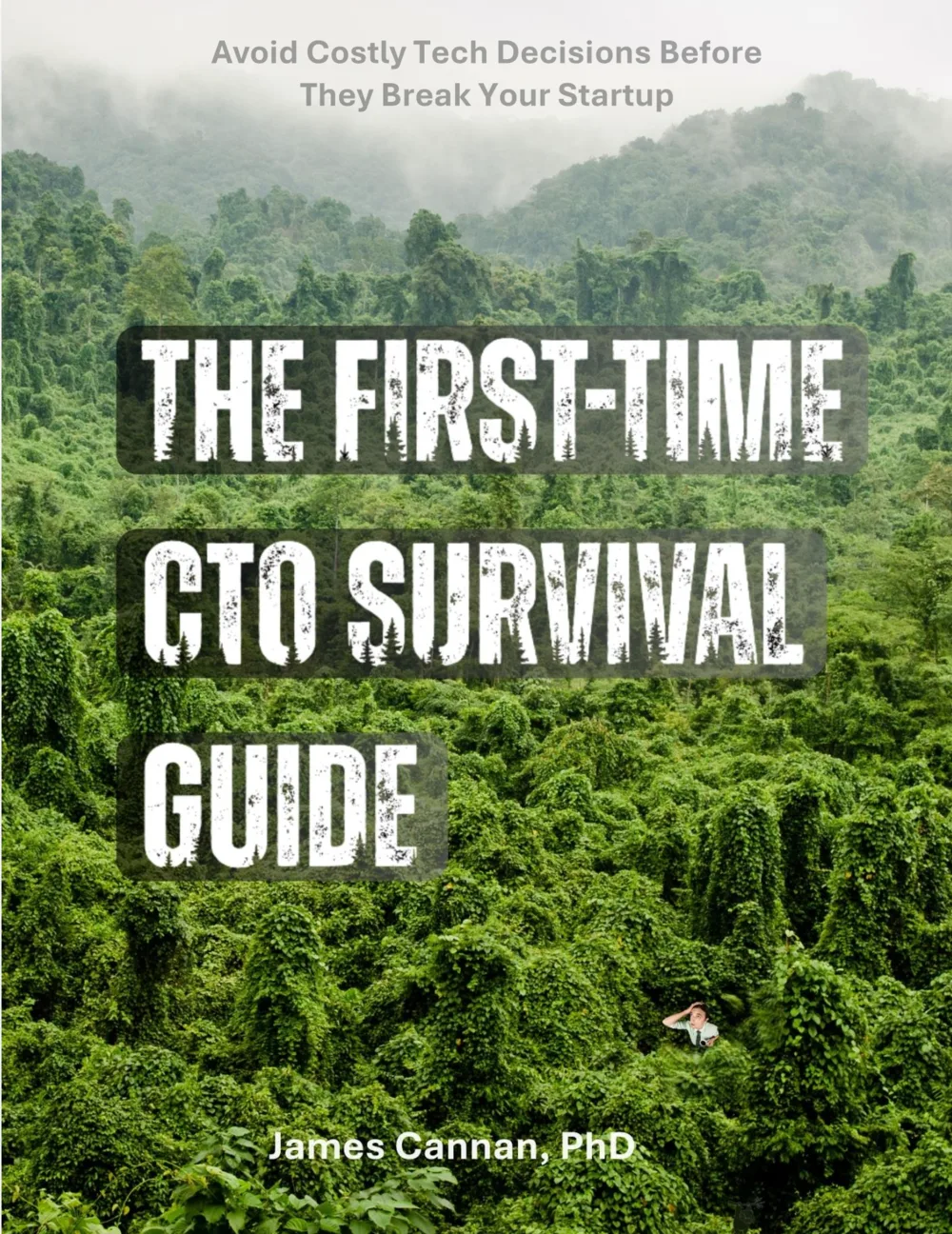
Cover of The First-Time CTO Survival Guide

Field guide

The First-Time CTO Survival Guide

A concise playbook for the expensive mistakes: architecture calls, hiring before the role is clear, AI bets with no kill criteria, and board updates that sound technical instead of useful.

Check out the guide

In-depth · ~20 to 35 min

Map your coverage

Score yourself against the same Common responsibilities on this page. See where you are strong, where you are thin, and what to work on next.

Start the Gap Assessment

Light · ~3 minutes

What kind of CTO are you?

A short, shareable persona quiz. Finds your default operating style under pressure before you go deeper.

Take the persona quiz

Questions

Before you score yourself

In practice, a CTO owns technology strategy, engineering systems, people leadership, product partnership, operations and cost, data and AI, risk and security, and communication with the business. The mix shifts by stage, but those eight clusters are the common core across most real postings.

Want the assessments side by side? Start at the CTO assessments hub.

You have the map. Now see where you are thin.

The Gap Assessment scores you against the same 51 responsibilities on this page and gives a short priority list you can act on.

Take the CTO Gap Assessment